

Investor Education
Real estate investing didn’t “stop working” — but the market is rewarding investors who underwrite tighter, manage risk faster, and choose strategies that fit today’s rates, inventory, and buyer/tenant behavior.
This guide breaks down the current market trends impacting real estate investors, what they mean for your numbers, and how to adjust your buying, financing, and exit strategy so you don’t get caught holding the bag.
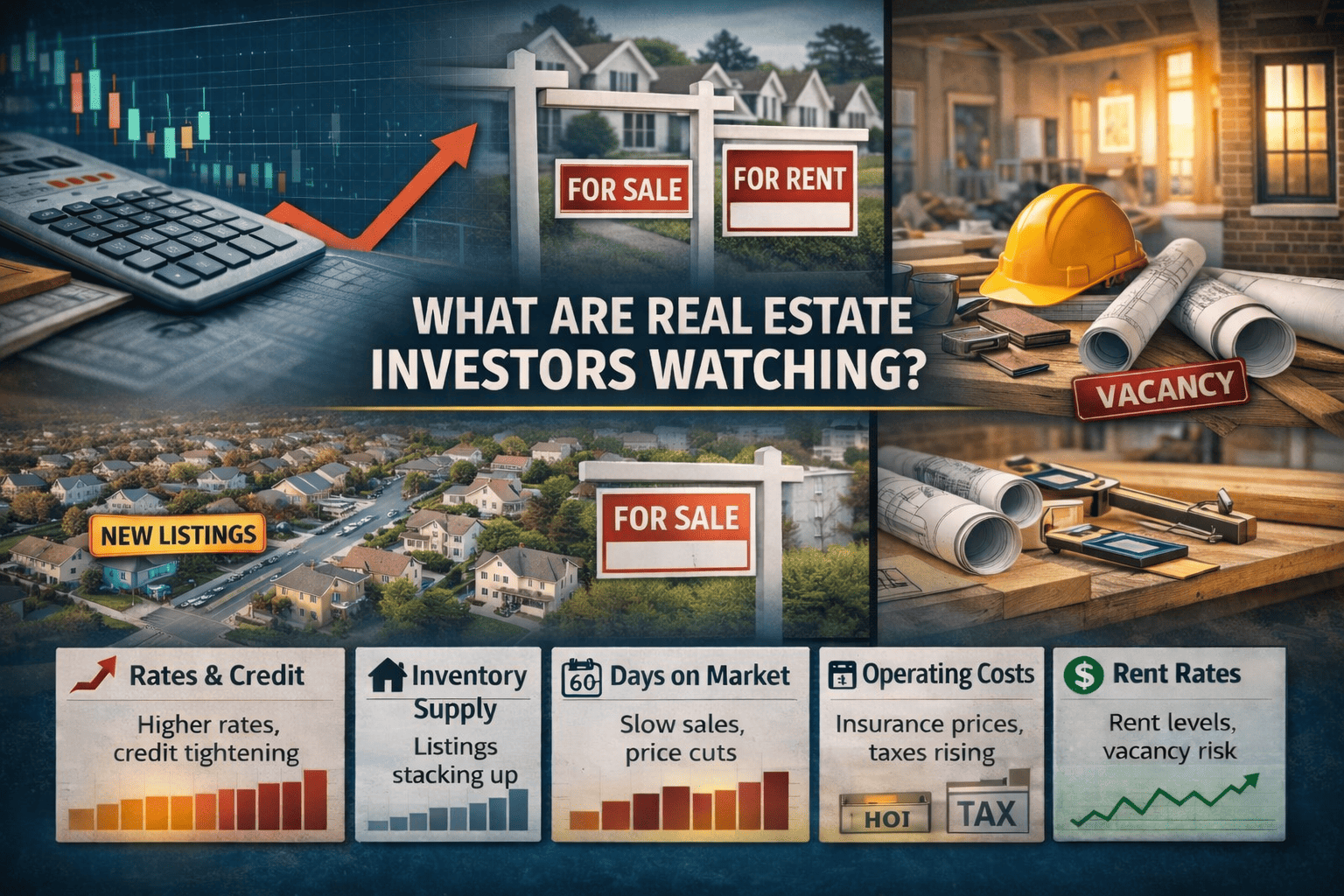
Market snapshot: the 5 trends investors should track weekly
You don’t need to predict the market — you need to measure it. These five trends are the fastest signals for whether your deals should be underwritten tighter (or whether you can lean into growth).
1
Rates + credit
Higher rates compress affordability and reduce buyer pool. Credit standards also affect demand.
2
Inventory + months supply
More supply means more competition and slower absorption — which impacts exits and rent pricing.
3
DOM + price reductions
Rising days on market often leads to concessions and cuts. Underwrite time and price-drop scenarios.
4
Insurance + taxes
Premium spikes and tax resets can break DSCR and reduce net yield even if rent is stable.
5
Rehab + labor costs
Cost volatility impacts flips and BRRRR timelines. The best operators price contingencies and delays.
Operator mindset: When trends move against you, you don’t “hope.” You adjust the inputs.
Rates + financing pressure: why tight underwriting wins
When borrowing costs rise, deals don’t just get “harder” — the market becomes less forgiving. Investors win by building margin into the deal so the project survives delays, appraisals, and concessions.
How higher rates change deals
- Monthly payments rise → affordability drops → fewer qualified buyers
- Cap rates may expand in some markets → values soften
- Holding costs increase → flips need faster timelines or wider spreads
- Refi math gets tighter → BRRRR needs better basis + strong rents
What to do about it
- Underwrite ARV as a range, not a single number
- Stress test DOM and price cuts before you buy
- Keep scope “comp-appropriate” to protect resale demand
- Use calculators to model holding costs + debt coverage
Run your deal math before you commit
Model holding costs, rehab, and profit in minutes so you don’t underwrite a surprise.
Inventory + demand: where deals get trapped
Inventory isn’t just a headline — it changes what buyers and tenants will tolerate. More options = more negotiation power for the other side. Investors should watch whether supply is rising in the exact neighborhood and price tier they play in.
Healthy demand signals
- Listings go pending quickly at your target price
- Fewer price reductions in your comp set
- Open houses and showing volume stay strong
- Rentals lease quickly without heavy discounts
Warning signs (tighten underwriting)
- DOM rising and “stale” listings stacking
- More price cuts and seller concessions
- New competing inventory from builders or investors
- Rental discounts, longer vacancy, more incentives
Key idea: Demand is hyper-local. Underwrite what your neighborhood is doing — not what the national news is saying.
Pricing, DOM, and concessions: how spreads get compressed
Investors often lose profit twice: first to a longer hold, then to a price reduction or concession. The fix is simple — price those scenarios before you buy.
Underwrite a DOM buffer
- Add +30–60 days to your base timeline
- Assume at least one “re-list / re-market” week
- Plan for final punch + cleaning + staging time
- Budget a realistic buyer concession range
A quick holding cost stress test
If your extra hold adds $X per month, then a +60 day slip adds roughly:
Extra Hold Cost ≈ Monthly Carry × 2
If your profit doesn’t survive a simple timeline slip, the deal is tighter than it looks.
Rehab, labor, insurance, and operating costs: the silent profit killers
Markets can feel “fine” while your margins disappear through higher rehab bids, longer lead times, and operating cost increases. If you invest for yield, insurance and taxes can be the difference between a deal that cash flows and one that doesn’t.
Cost pressures to watch
- Labor scarcity and schedule gaps (timeline risk)
- Material price spikes and shipping delays
- Insurance premium increases and stricter underwriting
- Tax reassessments after purchase or rehab
- HOA and utility cost creep
How to protect the numbers
- Carry contingency on rehab, not just “hope”
- Use scopes with quantities + unit pricing
- Confirm insurance early (coverage + premium)
- Underwrite taxes conservatively on acquisitions
- Keep finishes comp-aligned to reduce rework
Heads up: Insurance and taxes can break DSCR even when rent is strong. Don’t skip those inputs.
Rental trends: rent growth, vacancy risk, and tenant behavior
Rental demand can be strong while rent growth cools. Investors should underwrite based on today’s market rent, realistic vacancy, and expenses — not best-case assumptions from last year.
What “healthy” rental demand looks like
- Comparable rentals lease within a normal marketing window
- Minimal incentives required to place tenants
- Stable occupancy and predictable turnover
- Rents align with wages and local tenant pool
When to underwrite more conservatively
- Rent comps show frequent discounts or concessions
- Vacancy up and days-to-lease rising
- Tenant quality issues increasing (collections, damages)
- Operating costs rising faster than rent
Check your DSCR before you buy
Use our DSCR Calculator to see whether rent supports the payment and expenses.
Strategy shifts that work now (flip, BRRRR, rentals)
The best strategy is the one that survives today’s constraints: financing costs, time-to-exit, and operating expenses. Here are practical shifts investors are using to stay profitable.
If you flip
- Buy deeper or tighten scope to protect margin
- Underwrite 2–4% price-drop scenarios
- Prioritize “fast ROI” finishes that move buyers
- Pre-plan listing triggers (reduce by X on day Y)
If you BRRRR
- Focus on basis: buy right and rehab with discipline
- Confirm rent comps before purchase
- Plan for reserves and conservative refi assumptions
- Protect DSCR with realistic taxes/insurance
If you buy/hold
- Target durable tenant demand and stable submarkets
- Stress test vacancy and expense increases
- Underwrite maintenance and capex from day one
- Choose a loan term/structure you can hold through cycles
If you do short-term rentals
- Underwrite seasonality and occupancy volatility
- Confirm local regulations and permit requirements
- Model higher management/cleaning expenses
- Keep a strong reserve buffer for downturns
Underwrite smarter: quick stress tests that prevent bad buys
These quick tests are designed to help you avoid the most common investor mistake: underwriting a deal that only works if nothing goes wrong.
- Timeline test: add +30–60 days — does profit (or DSCR) still work?
- Price-drop test: model a 2–4% reduction — still acceptable margin?
- Expense test: increase insurance + taxes — does cash flow survive?
- Vacancy test: add one extra month vacant — still okay?
- Scope test: add 10–15% contingency — does the deal still clear?
Want your real numbers? Use the calculators first, then apply or reach out when you’re ready.
Investor checklist (copy/paste)
Use this as a quick pre-offer checklist. It’s designed to keep your underwriting tied to today’s market conditions.
- Rates checked: current pricing assumptions used (not last month’s)
- Comps validated: sold + active comps match finish level and buyer pool
- Inventory scan: competing listings rising or falling in your price tier
- DOM reality: include buffer + price-drop plan
- Rehab scoped: line items + contingency included
- Operating costs: insurance + taxes confirmed or underwritten conservatively
- Exit options: plan A + plan B (rent vs sell) penciled
- Deal stress tests: time, price, expenses, vacancy scenarios run
Market trends FAQs
Are real estate deals still worth it with higher rates?
They can be — but underwriting has to adjust. Deals that survive higher carrying costs, longer timelines, and more negotiation pressure are the ones that win.
What’s the biggest trend investors underestimate?
Time-to-exit. Longer DOM compounds holding costs and often forces concessions. Underwriting a timeline buffer is one of the simplest ways to avoid bad buys.
How do I know if my market is cooling?
Watch rising DOM, frequent price reductions, and increasing inventory in your exact neighborhood and price tier. Cooling is usually local before it’s national.
What should rental investors watch right now?
Rent comps, vacancy trends, and operating costs — especially insurance and taxes. Cash flow can disappear even when demand feels strong if expenses rise faster than rent.
What’s a simple way to underwrite safer?
Run a short list of stress tests: +30–60 days timeline, 2–4% price cut, higher expenses, and an extra month of vacancy. If the deal still works, it’s far safer.
Want help sizing up a deal in today’s market? Run your numbers with our calculators, then reach out with questions anytime. Contact us here →
Disclaimer: This article is for educational purposes only and does not constitute financial, legal, or tax advice. Loan programs, guidelines, and availability may vary. Always verify property-specific numbers and consult professionals as needed.