
Fix & Flip Strategy
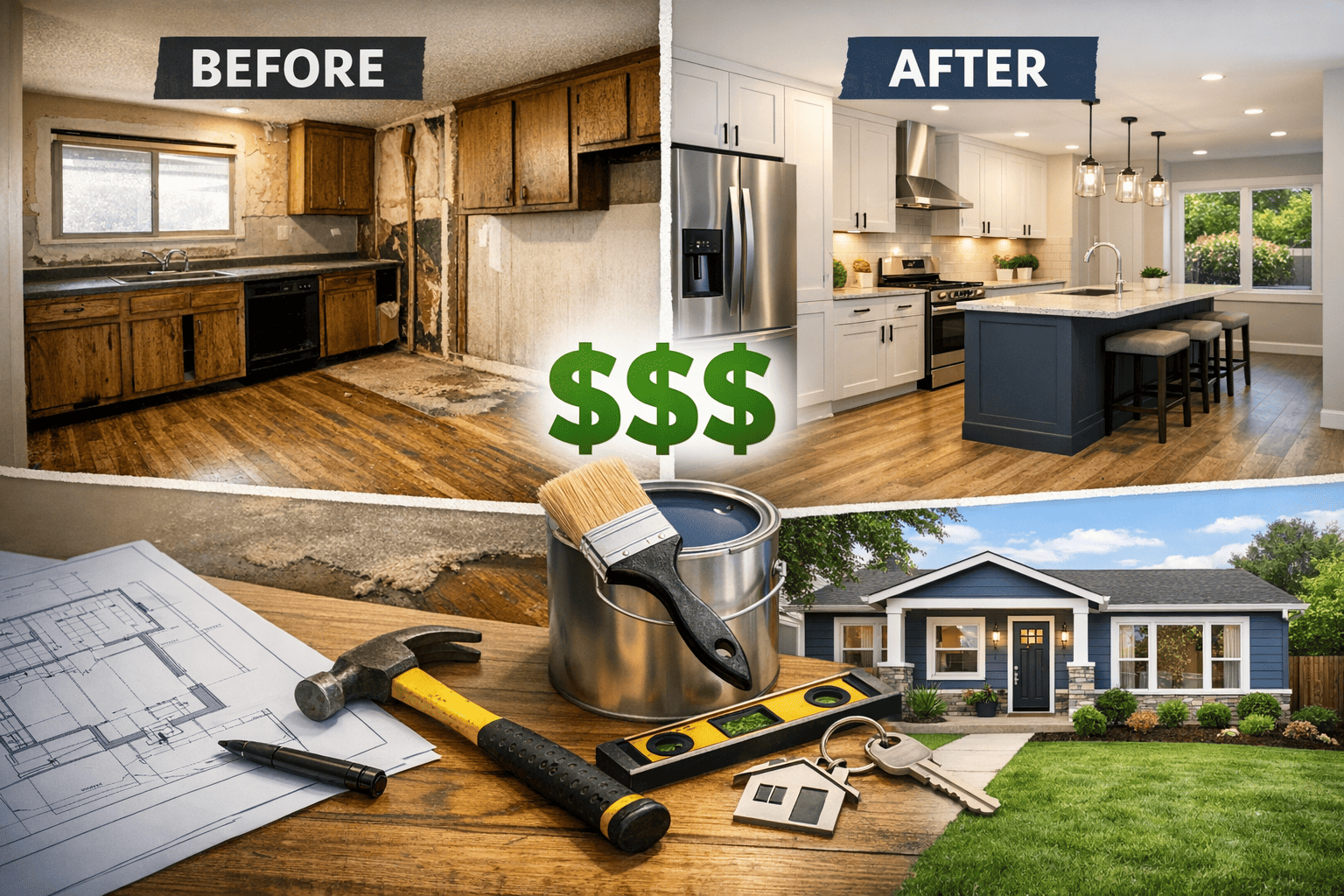
The best flips don’t win by doing more renovations — they win by doing the right renovations for the buyer, the comps, and the price point. This guide breaks down the renovations that typically deliver the strongest ROI for flippers, plus how to avoid over-improving and blowing your spread.
Goal: build a scope that improves buyer perception, protects days on market, and keeps your budget and timeline predictable.
The 3 ROI rules (before you swing a hammer)
ROI is not just “what the renovation costs” — it’s what the renovation does to the buyer’s offer, the time-to-sell, and the risk profile of the deal.
1
Match the comps
Renovate to the finish level buyers already pay for in your micro-market — not to your taste.
2
Buy perception cheaply
Paint, lighting, floors, and clean finishes move the needle more than expensive “showpiece” upgrades.
3
Remove deal-killers
Fix issues that scare buyers/appraisers: roof, HVAC, electrical, plumbing leaks, water damage, and safety.
Rule of thumb: If the renovation won’t increase your likely sale price or reduce your time-to-sell, it’s not ROI — it’s risk.
Kitchen upgrades that sell (high ROI when scoped right)
Kitchens drive buyer emotion. You don’t need luxury — you need clean, consistent, and cohesive. Strong kitchen ROI usually comes from smart surface upgrades, not full layout overhauls.
Best ROI kitchen plays
- Cabinet refresh (paint + new hardware) when boxes are solid
- Mid-grade counters (quartz or durable stone-look options)
- Single-bowl sink + modern faucet
- Updated lighting (recessed or clean fixtures)
- New appliance package only if comps expect it
Where flippers overspend
- Custom cabinets in mid-grade neighborhoods
- High-end appliance brands that don’t match ARV
- Moving plumbing/electrical for “dream layouts”
- Exotic counters and statement tile that polarize buyers
- Too many finishes (mixed metals, clashing styles)
Pro move: If the existing cabinet layout works, keep it. Layout changes can crush timeline and contingency.
Bathrooms: high perception ROI (without going luxury)
Bathrooms sell confidence. Buyers forgive “not huge,” but they don’t forgive “gross.” The ROI goal is a bathroom that feels new, clean, and leak-free.
Top ROI bathroom updates
- New vanity + mirror + light
- Fresh paint + modern hardware
- Updated fixtures (faucet, shower trim, toilet if needed)
- Reglaze or replace tub if stained/outdated
- Simple, clean tile (avoid trendy patterns)
Avoid low-ROI upgrades
- Oversized custom showers for low/mid price points
- Luxury steam showers and specialty glass packages
- Designer tile that limits buyer appeal
- Moving drains and plumbing unless required
- Heated floors unless comps demand it
ROI killer: Hidden leaks or bad subfloor. If water damage exists, fix it right — cosmetic updates won’t save the inspection.
Paint + flooring: fastest “value per dollar” upgrades
These upgrades improve buyer perception across the entire home. They’re often the best ROI because they’re predictable, fast, and scalable — and they make photos pop online.
Paint that sells
- Neutral walls (clean, modern, bright)
- Fresh trim/doors if scuffed or yellowed
- Consistent sheen + crisp cut lines
- Matte/eggshell on walls, semi-gloss on trim
Flooring that sells
- Durable LVP in living areas for mid price points
- Clean carpet in bedrooms when comps expect it
- Repair squeaks/subfloor dips before install
- Simple transitions + consistent plank direction
Easy win: Paint + floors + lighting can change perceived value more than a “big” renovation — with far less risk.
Curb appeal: first impression profit
Curb appeal upgrades are ROI accelerators because they impact click-through rate, showings, and buyer confidence before the front door opens.
High ROI exterior upgrades
- Front door + modern hardware
- Exterior paint or pressure wash
- Landscaping cleanup (trim, mulch, edges)
- New mailbox + house numbers + exterior lighting
- Driveway/sidewalk cleanup and simple repairs
ROI lens: curb appeal math
If curb appeal improves photos and first impressions, it can reduce DOM — and fewer days on market can mean fewer price cuts and less holding cost.
Rule: Exterior should match the “after” story buyers expect at your ARV.
Systems: ROI through risk removal (not glamour)
Mechanical work rarely “wows” buyers — but it removes the deal-killers that cause inspection issues, appraisal pushback, and renegotiations.
When systems work is worth it
- Roof near end of life (or active leaks)
- HVAC not functioning or clearly outdated
- Electrical safety problems (panels, hazards)
- Plumbing leaks, old supply lines, bad drains
- Water intrusion (crawlspace/basement issues)
How to protect ROI on systems
- Fix what’s required to pass inspection confidently
- Document upgrades (receipts, warranties)
- Avoid “extras” buyers won’t value
- Prioritize safety and functionality
- Don’t bury system issues under cosmetic finishes
Risk alert: If your rehab scope ignores known system issues, your “profit” is just a future concession.
Layout fixes (when it’s worth it — and when it’s not)
Layout changes can be high ROI in the right situation — but they are also the fastest way to create timeline risk and change orders. Only do layout work when it solves a real buyer objection.
1
Identify the buyer objection
Example: “tiny kitchen” or “awkward bath access” that shows up in comps feedback.
2
Confirm comps pay for the fix
Don’t assume. Validate that renovated comps actually justify the higher ARV.
3
Price the risk
Layout changes often require permits, trades, and contingency. Underwrite a buffer.
4
Keep it simple
Open sight lines and functional flow win — complexity usually doesn’t.
Best layout ROI: fixes that improve flow without moving plumbing stacks or major structural changes.
Renovations that usually underperform (ROI traps)
Some upgrades look impressive but don’t translate into higher offers — especially when the neighborhood and comps don’t support them. These are common “ROI traps” flippers should be cautious with.
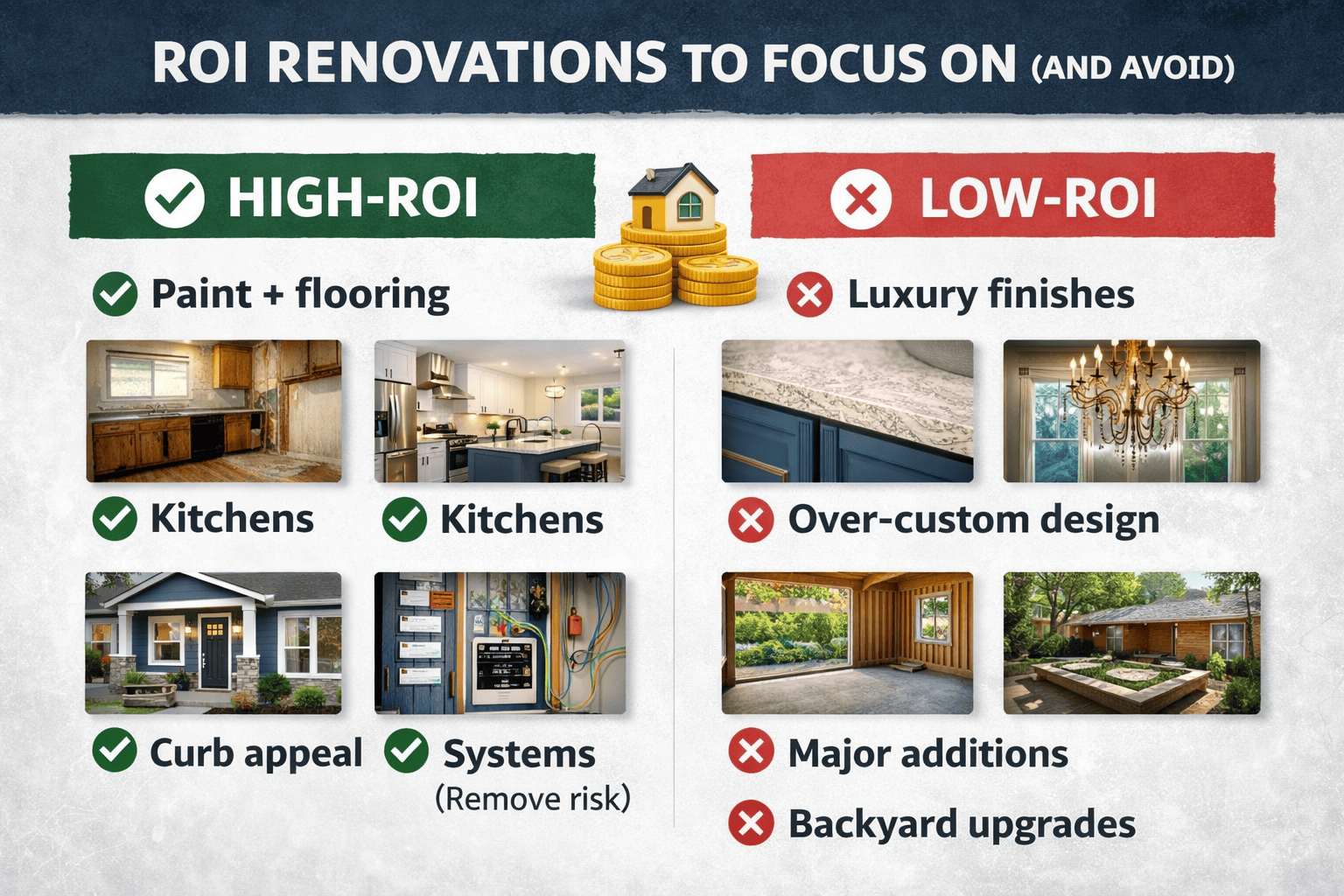
- Luxury finishes in mid-grade neighborhoods (buyers won’t pay for it)
- Over-custom design that narrows buyer pool
- High-end landscaping with ongoing maintenance needs
- Major additions without strong comp support
- Moving plumbing just for aesthetics
- “Smart home everything” when buyers don’t expect it
Reality: Most profitable flips are clean, consistent, and functional — not exotic.
Scope sequencing (timeline control = ROI)
Even great renovations lose ROI if your project runs long. Sequencing reduces delays and helps you avoid expensive rework. Here’s a clean order of operations that keeps trades flowing.
1
Demo + discovery
Open walls where needed, confirm surprises early, finalize scope before ordering finishes.
2
Rough trades
Framing, plumbing, electrical, HVAC — lock inspections and prevent downstream changes.
3
Walls + base finishes
Drywall, prime, paint base coats, then flooring (depending on product + workflow).
4
Kitchen + baths
Cabinets, counters, plumbing trim, lights, mirrors, fixtures, then final paint touch-ups.
5
Curb appeal + final clean
Exterior touch-ups, landscaping cleanup, staging, photos — then list with confidence.
Want to test ROI before you renovate?
Use our Fix & Flip Calculator to model rehab budget, holding costs, and profit so your scope stays realistic.
ROI renovation checklist (copy/paste)
Use this list when building your scope. It keeps your renovation focused on buyer perception, inspection confidence, and comps.
- Comps checked: renovated sold + active comps match target finish level
- Kitchen plan: refresh if layout works; avoid custom upgrades without comp support
- Bathrooms: clean, new fixtures, leak-free, simple tile, strong lighting
- Paint + floors: consistent neutrals + durable flooring; fix subfloor issues
- Lighting: bright, modern, consistent fixtures (no mismatched styles)
- Curb appeal: front door, numbers, landscape cleanup, exterior lighting
- Systems: roof/HVAC/plumbing/electrical issues resolved and documented
- Over-improve check: scope fits neighborhood and ARV range
- Sequencing: trades scheduled to avoid rework and timeline creep
Want feedback on your scope? Run the numbers first, then reach out or apply when you’re ready.
Flipper renovation FAQs
What renovations usually deliver the highest ROI for flippers?
Paint, flooring, lighting, kitchen refreshes, bathroom updates, and curb appeal improvements often deliver strong ROI because they improve buyer perception and help homes sell faster.
How do I avoid over-improving a flip?
Match your finishes to renovated comps in the same micro-market. If comps don’t support luxury finishes, keep the scope clean and consistent instead of upgrading to “showpiece” materials.
Is it worth replacing major systems like HVAC or roof?
Often yes when they are near end-of-life or failing. Systems work protects ROI by reducing inspection issues, renegotiations, and buyer hesitation — even if it’s not a “glamour” upgrade.
Do layout changes increase ROI?
Sometimes — but only when they solve a real buyer objection and comps prove buyers pay more for that improvement. Layout work can add permit and timeline risk, so price the risk in your budget.
What’s the fastest way to improve perceived value?
A clean exterior, modern lighting, fresh paint, and consistent flooring can dramatically improve photos and buyer impressions — often with less risk than major renovations.
Want a second set of eyes on your scope and numbers? If you’re not ready to apply yet, you can still reach out with questions anytime. Contact us here →